
The problem with kindness lessons
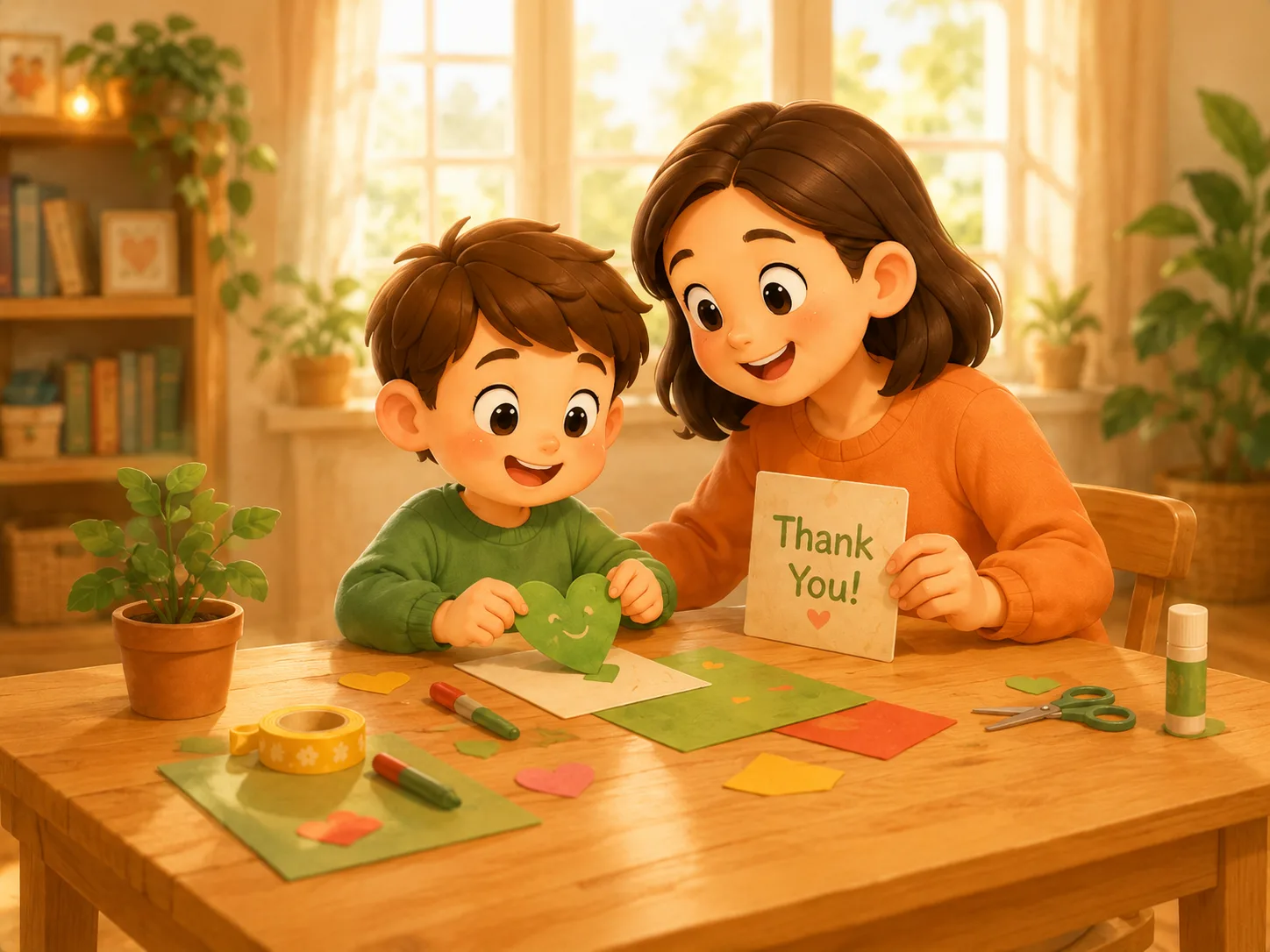
There's a common pattern in how we try to teach children compassion. We notice that our child pushed someone, or grabbed a toy, or said something unkind — and we sit them down for a Talk. We explain, in careful parent-voice, why we should be kind. We talk about feelings. We might even do a role-play.
And then, three days later, it happens again.
The truth is that compassion — real, habituated compassion, the kind that shows up automatically when another person is hurting — is not built through lessons. It's built through repetition. Through the small, unremarkable moments of ordinary life that happen so frequently we almost forget to notice them.
This piece is about those moments. It's about how to see them, use them, and trust that they're enough.
What developmental science tells us about compassion
Compassion is sometimes described as empathy plus action — the combination of feeling what another person feels and choosing to do something about it. Both parts develop gradually in early childhood, and both are shaped far more by environment than by biology.
Research from the Greater Good Science Center at UC Berkeley identifies the early childhood years — particularly ages 3 to 7 — as a critical window for compassion development. During this period, children are rapidly developing the capacity for perspective-taking: the ability to understand that other people have thoughts and feelings different from their own.
But perspective-taking is a skill, not an instinct. Like reading or counting, it needs to be practised. And the most natural, low-cost practice ground is everyday family life.
"Compassion is not what we teach children. It's what we model for them — in the way we speak about absent people, in the way we respond when someone drops something in the street, in the way we treat people who have no power over us."
— Dr Kristin Neff, pioneering researcher in compassion and self-compassion
The 30-second window
Most parents feel they don't have time to do more. The morning is already full — breakfast, school bag, the bus to catch. The evening is full too. There's homework, dinner, bath, the endless negotiation of bedtime.
But compassion doesn't need a slot in the schedule. It needs a 30-second window.
The 30-second window is the gap between noticing something and moving on. It's the moment when you're walking through Toa Payoh Hub with your four-year-old and you see an elderly woman struggling with her groceries. Most of the time, that moment passes unremarked. The child doesn't even notice.
But if you stop — even just to say, out loud, "That auntie is carrying a lot. I wonder if she's tired. Do you think we should help?" — you have just given your child a lesson in compassion more powerful than anything you could deliver at the dinner table.
💡 The 30-second window rule: whenever you notice something that calls for compassion — a person struggling, an animal in distress, a child sitting alone — pause for 30 seconds. Don't rush past. Name what you see. Ask how they might feel. Then, if it's safe and appropriate, act.
Three everyday moments and how to use them
Moment 1: When your child sees someone crying
This happens more than we think — a classmate who falls and cries, a baby sibling in distress, an adult who is visibly upset. Young children's responses to tears range from distress to curiosity to laughter (which parents find mortifying, but is actually developmentally normal).
The instinct is often to hurry the child away: "Come, don't stare." But staring is how children learn. The more useful response is to crouch down, lower your voice, and narrate: "That boy is crying. He might have hurt himself, or maybe he lost something. How do you think he feels?"
You don't always need to intervene. Sometimes the lesson is simply in noticing, naming, and wondering together.
Moment 2: When someone is unkind in front of your child
Children in Singapore regularly witness adult interactions that are less than kind: someone snapping at a service worker, a driver honking aggressively, a person ignoring a greeting. These moments are often more formative than we realise.
If it's safe to do so, name what happened afterwards: "Did you notice that man didn't say thank you to the cleaner? That made me a bit sad. What do you think the cleaner felt?"
This doesn't require moralising or a lecture. A quiet observation — "I think we can do better than that" — is enough. Children are paying close attention to how we interpret the world around them.
Moment 3: When your child is unkind
This is the hardest moment, and the most important. When a child does something unkind — pushes, excludes, says something cruel — the parental response shapes what they learn.
The research is clear: shaming ("How could you do that?") or lecturing ("I told you to be kind!") are the least effective responses. What works is a brief, warm, specific conversation: "When you grabbed that from Mei Xin, her face changed. Did you see? I wonder how she felt. What could you do now?"
This approach — called "inductive discipline" by developmental psychologists — asks children to consider the perspective and feelings of the person they've hurt, rather than focusing on the wrongness of their own behaviour. It builds the exact neural pathways compassion requires.
Compassion begins at home
Perhaps the most overlooked site for compassion education is the family itself. Children who learn to be kind to their siblings, to notice when a parent is tired, to offer help without being asked — are developing the same capacities that will later show up as kindness towards strangers and broader society.
In Singapore's fast-paced, academically focused culture, there is sometimes pressure to prioritise achievement over character. But the research is unambiguous: children who develop strong social-emotional skills in early childhood are more academically successful, not less. Compassion is not a distraction from success. It is the foundation for it.
The long game
Raising a compassionate child is not a project with a timeline. It's a long game, measured in years and in the accumulation of thousands of small moments that, taken together, form something invisible but profound: a way of moving through the world that notices others, pauses before reacting, and chooses to help.
You don't always see it working. Months of noticing, naming, and modelling can feel unrewarded — and then, one day, you're at the playground and your child walks over to a child sitting alone and says, quietly, "Do you want to play with us?"
That's it. That's the whole game. The seed, planted one 30-second window at a time, finally broke through.
Sowing Kindness Society runs Singapore's bilingual storytelling competition for children aged 3–6. If your child has a story about a small act of kindness — one they saw, did, or wish for — we'd love to hear it. Submissions are free — deadline TBD.
Submit Your Video ›A contributor to the Sowing Kindness Society reading room, writing about kindness, family life and raising kind children in Singapore.